
Digital Marketing for Small Businesses: A Complete Guide
In today’s digital world, customers search online before choosing a product, service, or business. For small businesses, having a strong online presence is no longer optional—it is an important part of building visibility, trust, and long-term growth.
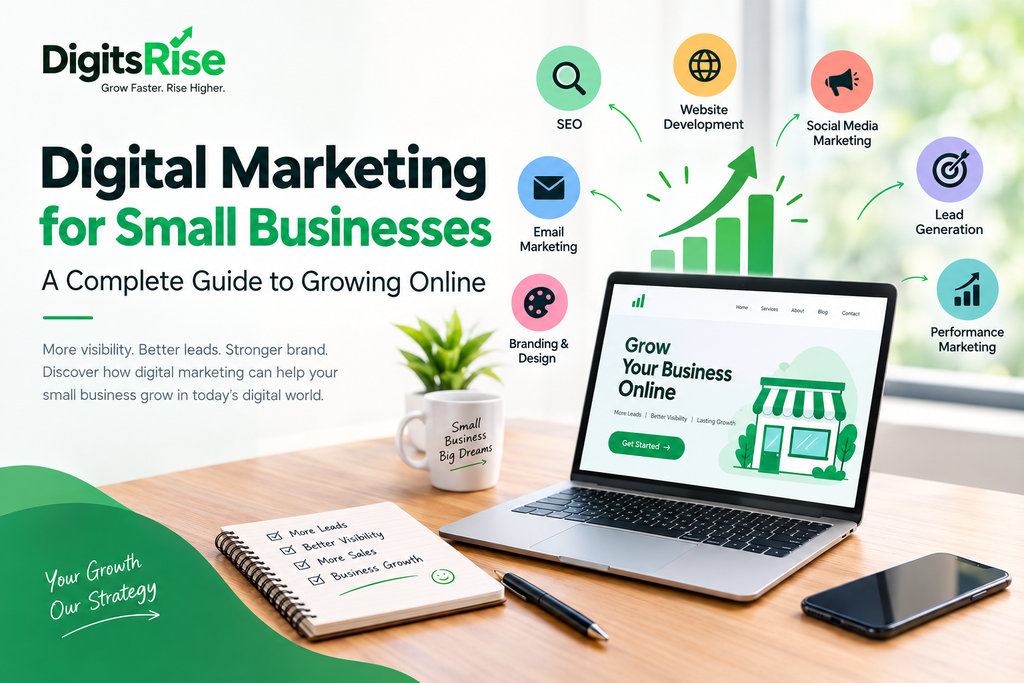
Digital marketing helps businesses connect with the right audience through search engines, websites, social media, content, online advertising, and other digital channels.
Whether you are a startup, local business, service provider, or growing company, the right digital marketing strategy can help you attract potential customers and generate more business opportunities.
What Is Digital Marketing?
Digital marketing is the process of promoting a business using online channels and digital technologies.
It can include:
- Search Engine Optimization (SEO)
- Website Design & Development
- Social Media Marketing
- Content Marketing
- Lead Generation
- Google Ads and Paid Advertising
- Performance Marketing
- Branding and Creative Design
- CRM and Business Automation
The goal is not simply to get more online visibility. A successful digital marketing strategy focuses on reaching the right audience and turning that attention into meaningful enquiries, customers, and business growth.
Why Is Digital Marketing Important for Small Businesses?
Small businesses often compete with larger companies that have bigger marketing budgets. A focused digital strategy can help smaller businesses reach specific audiences without trying to compete everywhere at once.
1. Increase Online Visibility
SEO and quality content can help your business become more visible when potential customers search for relevant products or services.
2. Reach the Right Customers
Digital marketing allows businesses to target specific audiences based on factors such as location, interests, search behaviour, and business needs.
3. Build Trust
A professional website, consistent branding, useful content, positive reviews, and an active online presence can help establish credibility.
4. Generate More Leads
A well-optimized website combined with clear calls to action can turn website visitors into enquiries and potential customers.
5. Measure Marketing Performance
Digital marketing provides access to useful performance data, allowing businesses to understand what is working and where improvements are needed.
7 Digital Marketing Strategies for Small Businesses
1. Search Engine Optimization (SEO)
SEO helps improve a website’s visibility in organic search results.
A strong SEO strategy may include:
- Keyword research
- On-page SEO
- Technical SEO
- Helpful content
- Internal linking
- Local SEO
- Image optimization
- Website performance improvements
The most effective SEO content should answer real customer questions and provide useful information instead of simply repeating keywords.
2. Professional Website Development
Your website is often the first major interaction a potential customer has with your business.
A professional website should be:
- Mobile-friendly
- Fast and easy to navigate
- Visually professional
- Clear about your services
- Easy to contact
- Designed with conversions in mind
Your website should quickly communicate what your business does, who you help, and how customers can get in touch.
3. Local SEO
For businesses serving a particular city or region, local SEO can be extremely valuable.
Important areas include:
- Google Business Profile
- Local keywords
- Location-specific service pages
- Customer reviews
- Consistent business information
- Local content
A strong local SEO strategy can help businesses become more visible to customers searching for services in their area.
4. Social Media Marketing
Social media provides businesses with an opportunity to build awareness and communicate directly with their audience.
Depending on your target audience, platforms such as Instagram, Facebook, LinkedIn, and YouTube can support your marketing strategy.
Useful content can include:
- Educational posts
- Industry tips
- Project highlights
- Short videos
- Customer-focused information
- Company updates
- Frequently asked questions
The focus should be on providing value rather than simply posting frequently.
5. Content Marketing
Content marketing helps businesses attract potential customers by answering their questions and solving their problems.
Examples include:
- Blog articles
- Guides
- Case studies
- FAQs
- Videos
- Service-related resources
- Industry insights
High-quality content can support SEO while also demonstrating your expertise and building trust with potential customers.
6. Lead Generation
Website traffic is valuable, but converting relevant visitors into leads is even more important.
Businesses can use:
- Contact forms
- Consultation forms
- Call buttons
- WhatsApp buttons
- Service enquiry forms
- Strong calls to action
Every important service page should give visitors a clear next step.
7. Performance Marketing
Paid advertising can help businesses reach potential customers more quickly.
Depending on your goals, this can include:
- Google Ads
- Social media advertising
- Remarketing
- Lead generation campaigns
- Conversion-focused landing pages
Paid marketing should always be supported by proper tracking and optimization.
SEO or Paid Advertising: Which Should You Choose?
SEO and paid advertising have different advantages.
SEO is generally a long-term strategy focused on building organic visibility, while paid advertising can provide faster access to targeted traffic.
For many businesses, the best approach is to use both.
SEO can build long-term visibility while paid campaigns can support immediate marketing and lead-generation goals.
How to Choose a Digital Marketing Agency
Choosing the right digital marketing agency can have a significant impact on your online growth.
Before selecting an agency, consider:
Experience
Look at the agency’s relevant experience and previous work.
Strategy
A professional agency should be able to explain the strategy behind its recommendations.
Transparency
You should understand what services are being provided and how progress will be measured.
Communication
Clear and consistent communication helps keep marketing activities aligned with your business objectives.
Reporting
Reports should focus on meaningful metrics such as relevant traffic, leads, conversions, visibility, and campaign performance.
Common Digital Marketing Mistakes to Avoid
Ignoring SEO
A website alone does not guarantee search visibility. SEO should be considered as part of the website and content strategy.
Targeting Everyone
Trying to reach everyone can make your marketing less effective. Define your ideal audience and focus on relevant customers.
Creating Content Without a Strategy
Publishing random articles or social media posts does not automatically generate business. Content should have a clear purpose.
Having a Poor Website Experience
A slow, confusing, or difficult-to-use website can result in lost enquiries.
Not Tracking Results
Without measuring performance, it becomes difficult to know which marketing activities are producing meaningful results.
How to Build a Simple Digital Marketing Strategy
A small business can start with a simple process:
Understand your audience → Build a strong website → Identify relevant search opportunities → Create useful content → Improve SEO → Build social media visibility → Generate leads → Track performance → Improve continuously
Digital marketing works best when these activities support each other rather than operating as completely separate channels.
How DigitsRise Can Help
At DigitsRise, we provide complete digital solutions designed to help businesses strengthen their online presence and create sustainable growth.
Our services include:
- Website Design & Development
- SEO
- Digital Marketing
- Social Media Marketing
- Lead Generation
- Performance Marketing
- Branding & Creative Design
- CRM & Business Automation
We focus on practical strategies, professional execution, and solutions aligned with your business goals.
Frequently Asked Questions
What is digital marketing for small businesses?
Digital marketing for small businesses means using online channels such as search engines, websites, social media, content, and paid advertising to reach potential customers and generate business opportunities.
Is SEO important for small businesses?
Yes. SEO can help small businesses improve their organic search visibility and reach people who are actively searching for relevant products or services.
How long does SEO take to show results?
SEO takes time and results vary depending on competition, website quality, content, authority, technical factors, and the target market. No agency can guarantee a specific ranking timeframe.
Is a website necessary for digital marketing?
A website is an important foundation for many digital marketing activities, including SEO, content marketing, lead generation, and paid advertising.
How can a small business generate more online leads?
A combination of targeted traffic, SEO, useful content, a conversion-focused website, clear calls to action, and suitable paid advertising can help generate qualified leads.
Final Thoughts
Digital marketing is not about being present on every online platform. It is about choosing the right channels, understanding your customers, and creating a strategy that supports your business goals.
With the right combination of SEO, website development, content, social media, lead generation, and performance marketing, small businesses can build stronger online visibility and create new opportunities for growth.
Ready to Grow Your Business Online?
Connect with DigitsRise and discover the right digital solution for your business.
Book a Free Consultation